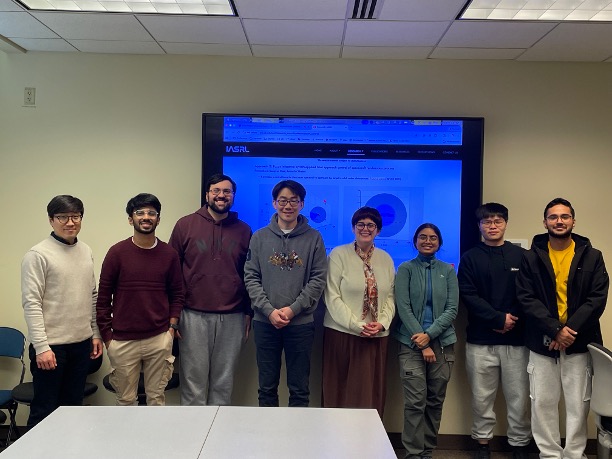
IASRL members attend the lab gathering during Spring 2026.
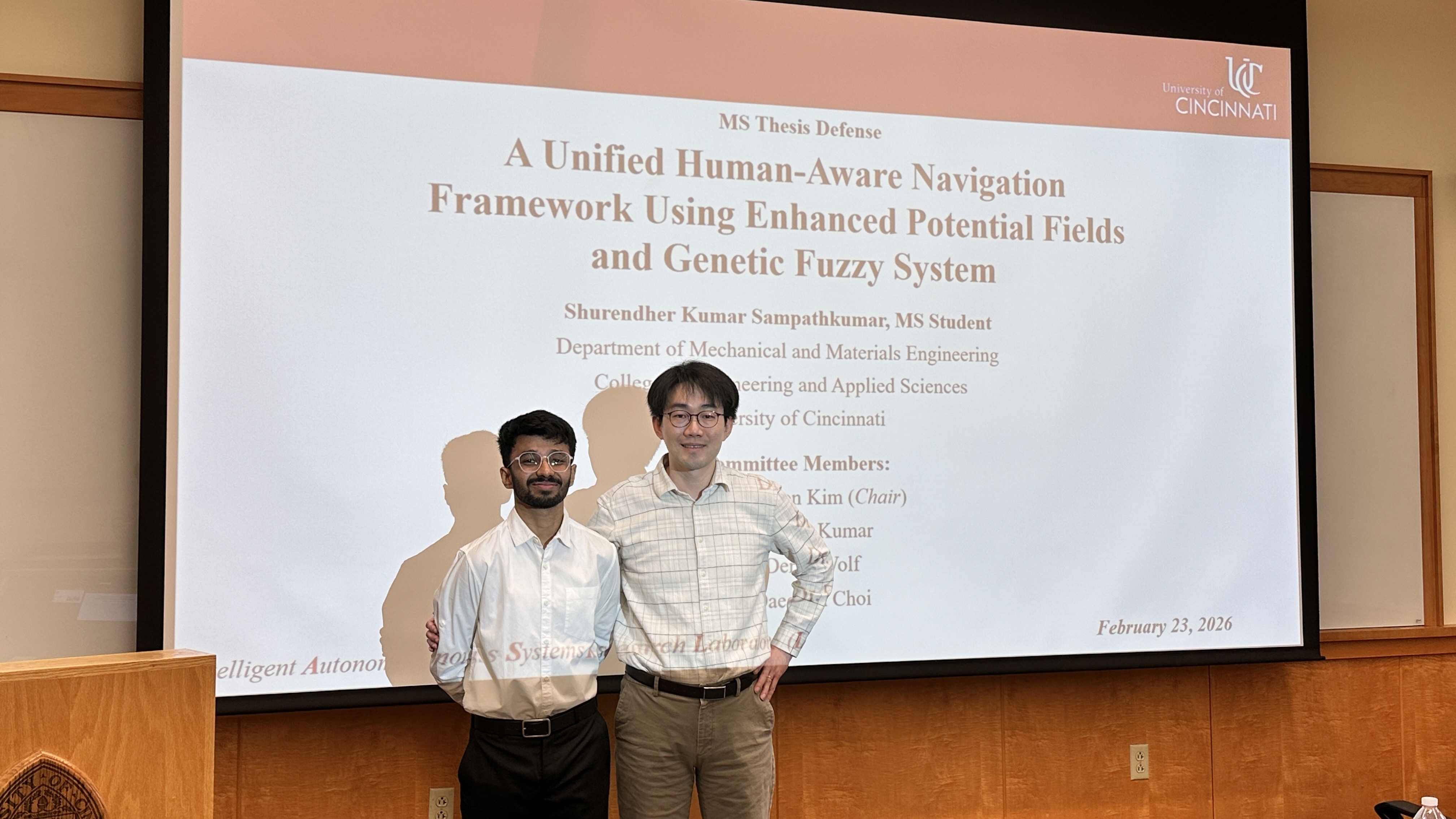
Shurendher Sampathkumar completes his MS Thesis Defense. Congratulations Shurendher!
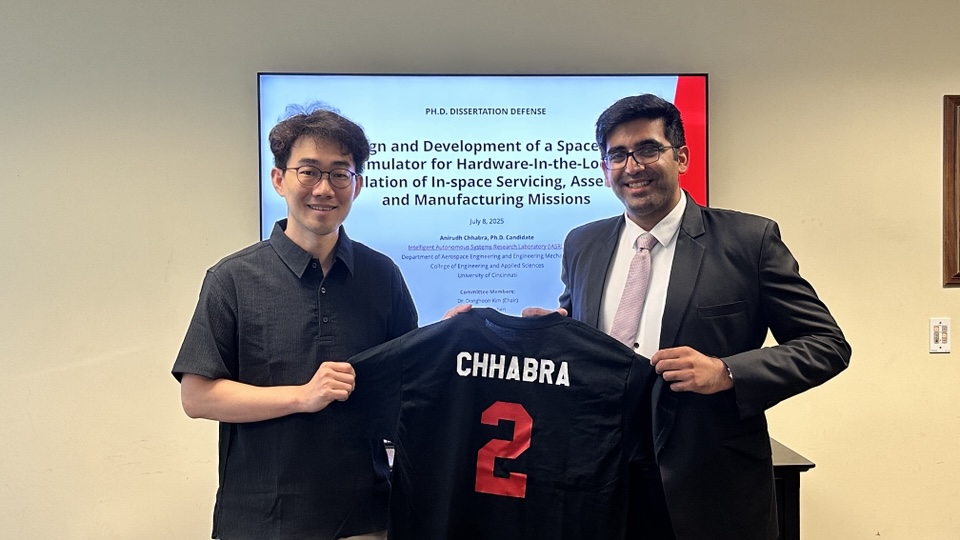
Anirudh Chhabra completes his Ph.D. Dissertation Defense. Congratulations Anirudh!
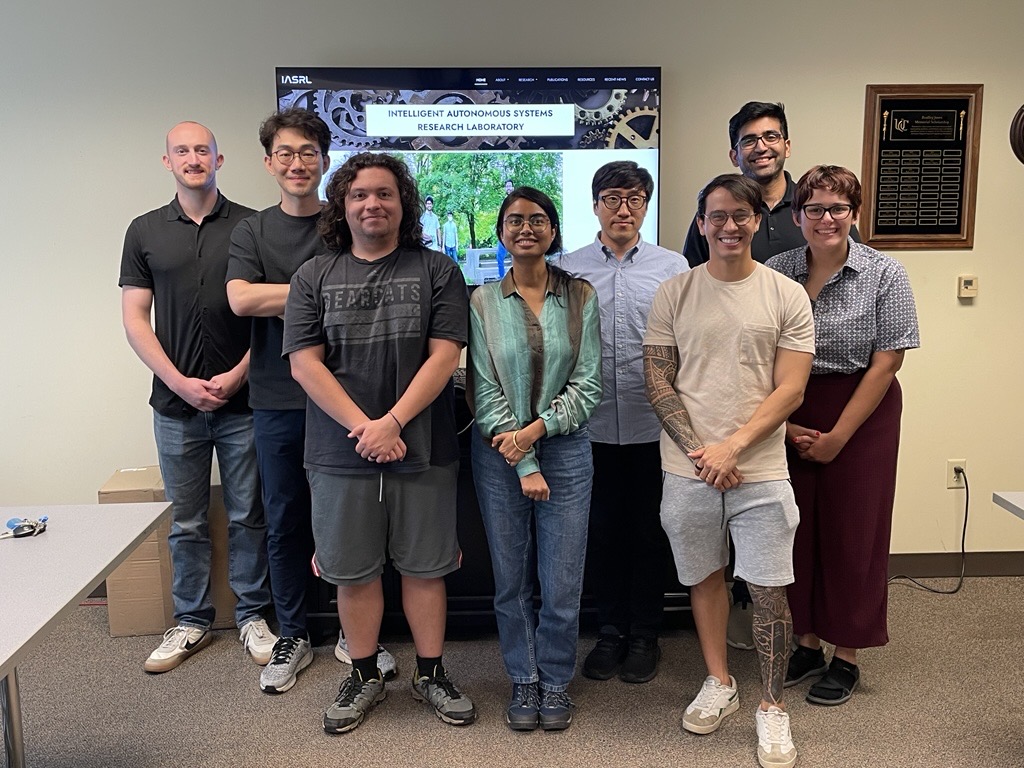
IASRL members attend the lab gathering during Summer 2025.
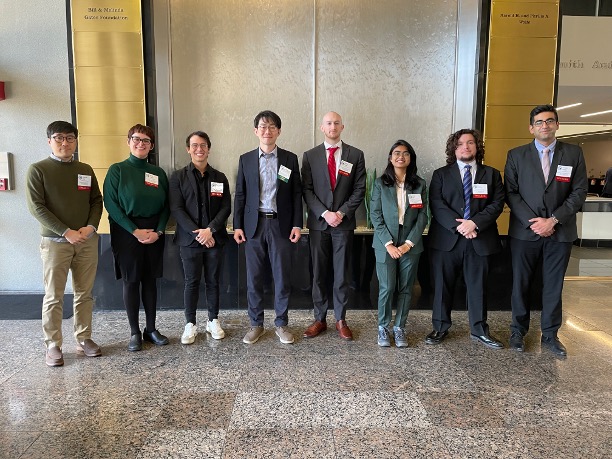
IASRL members at the 50th Dayton-Cincinnati Aerospace Sciences Symposium.
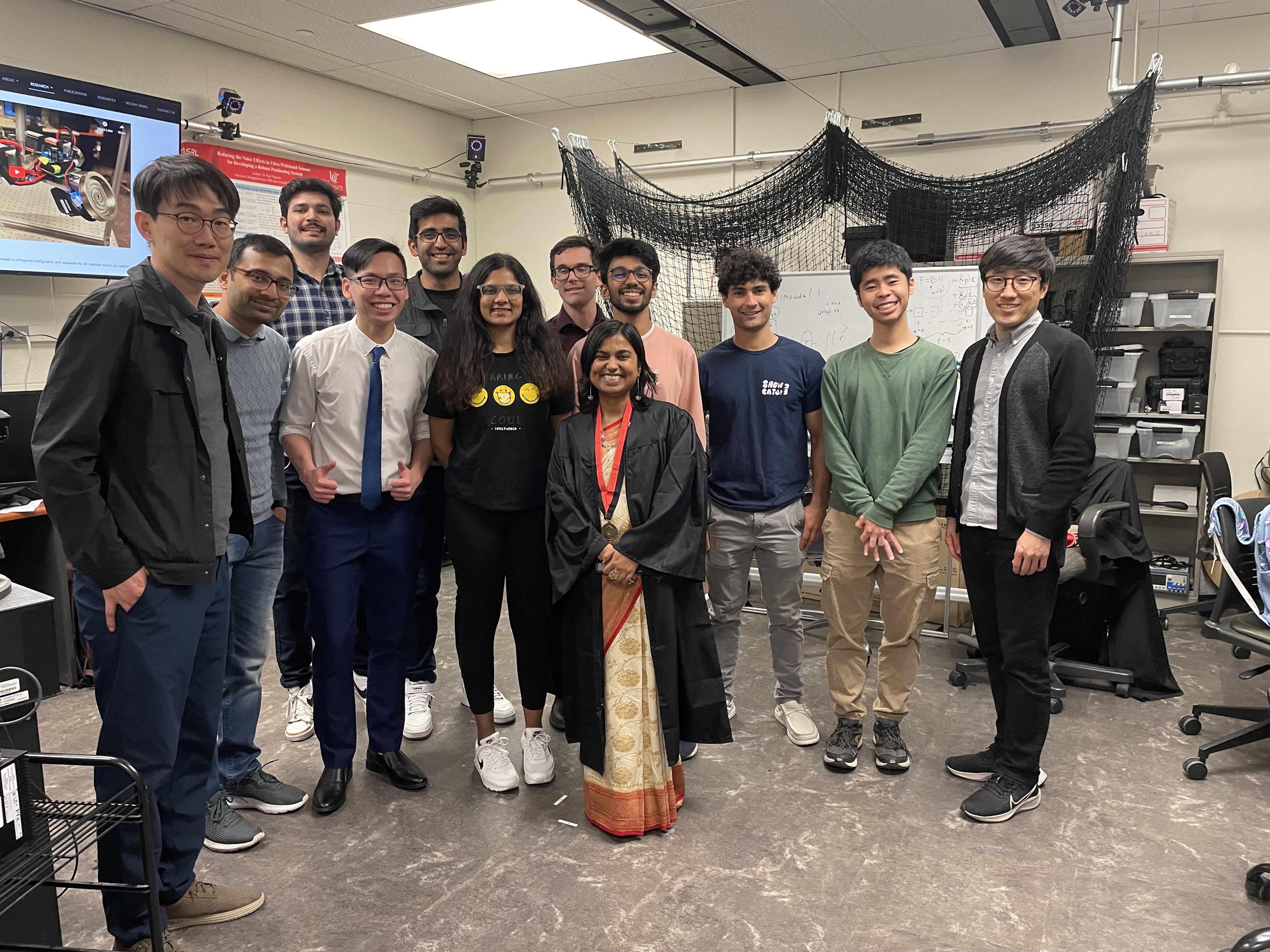
IASRL members attend the lab gathering during Spring 2024.
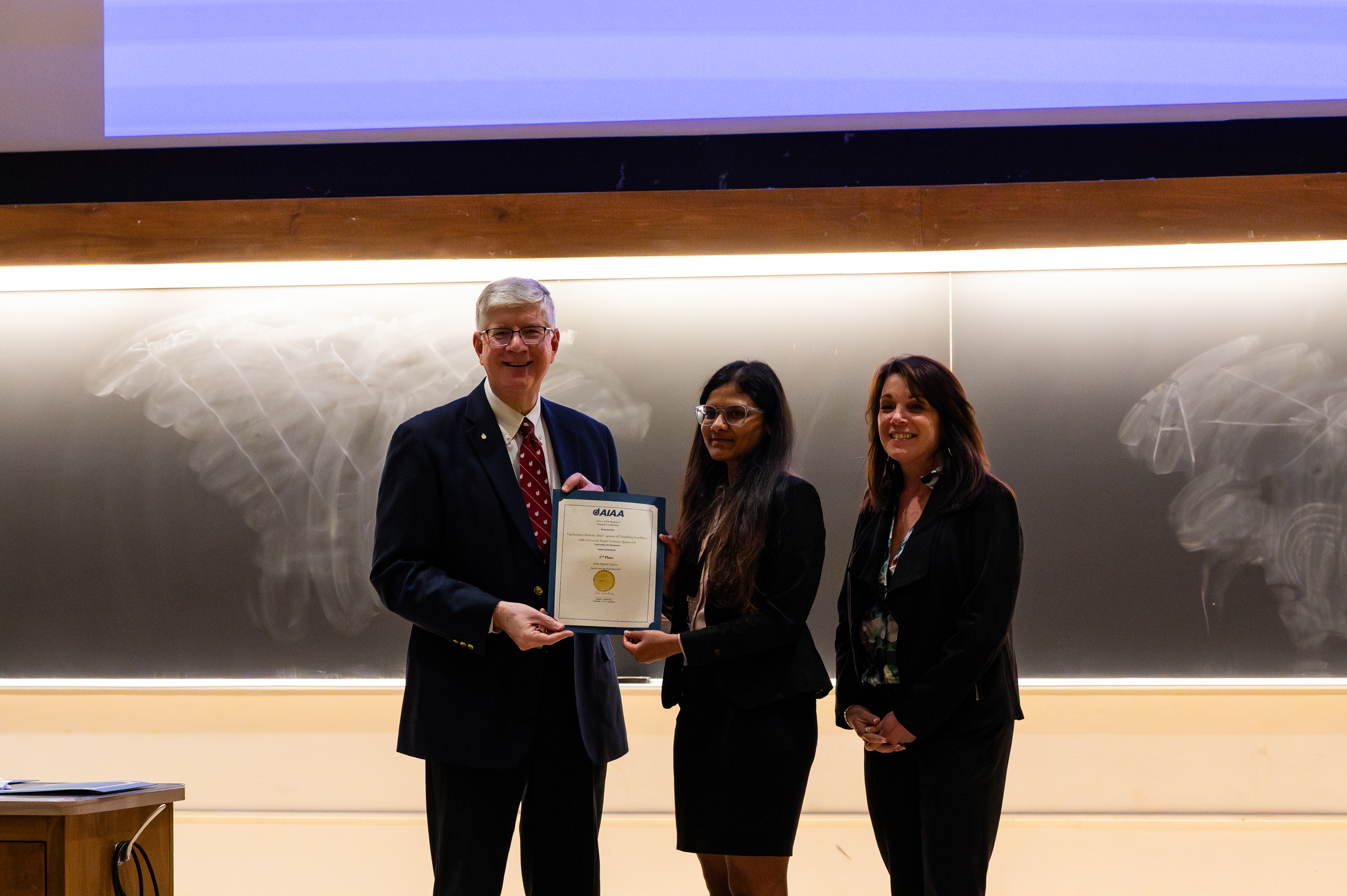
Sathya Karthikeyan receiving the 2nd prize award at the 2024 AIAA Region III Student Conference.
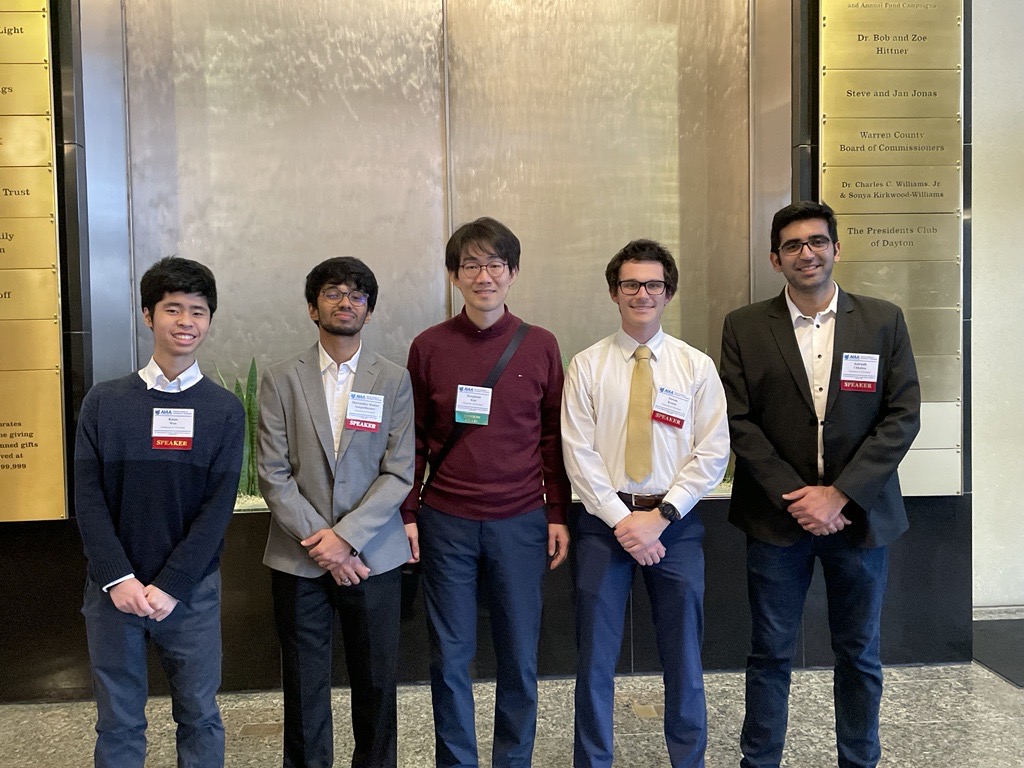
IASRL members at the 49th Dayton-Cincinnati Aerospace Sciences Symposium.
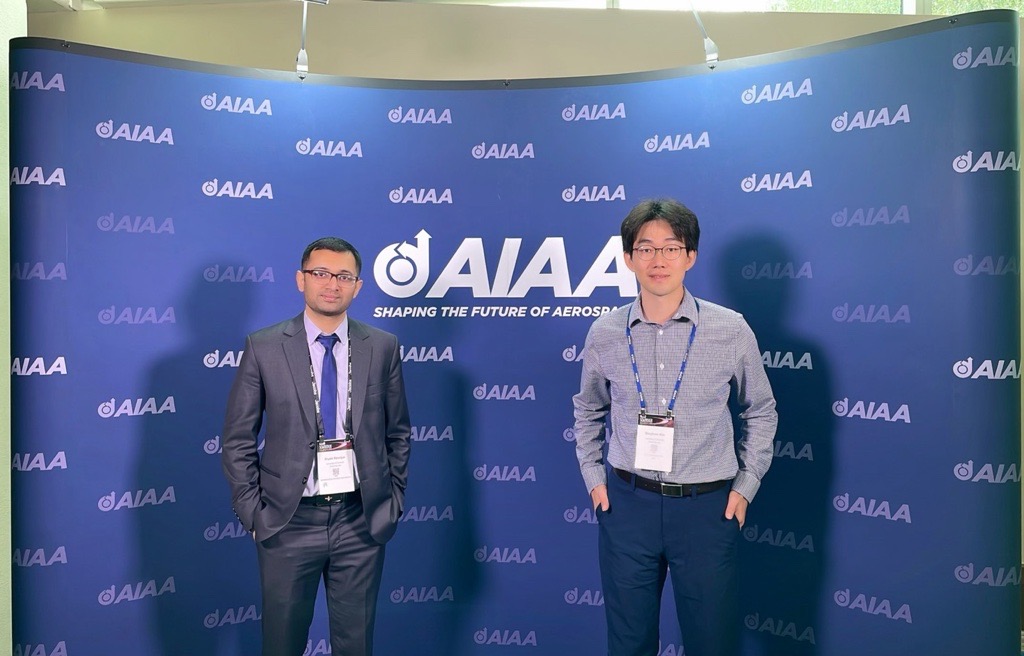
Shyam Rauniyar and Dr. Donghoon Kim at the 2024 AIAA SciTech Forum, Orlando, Florida.
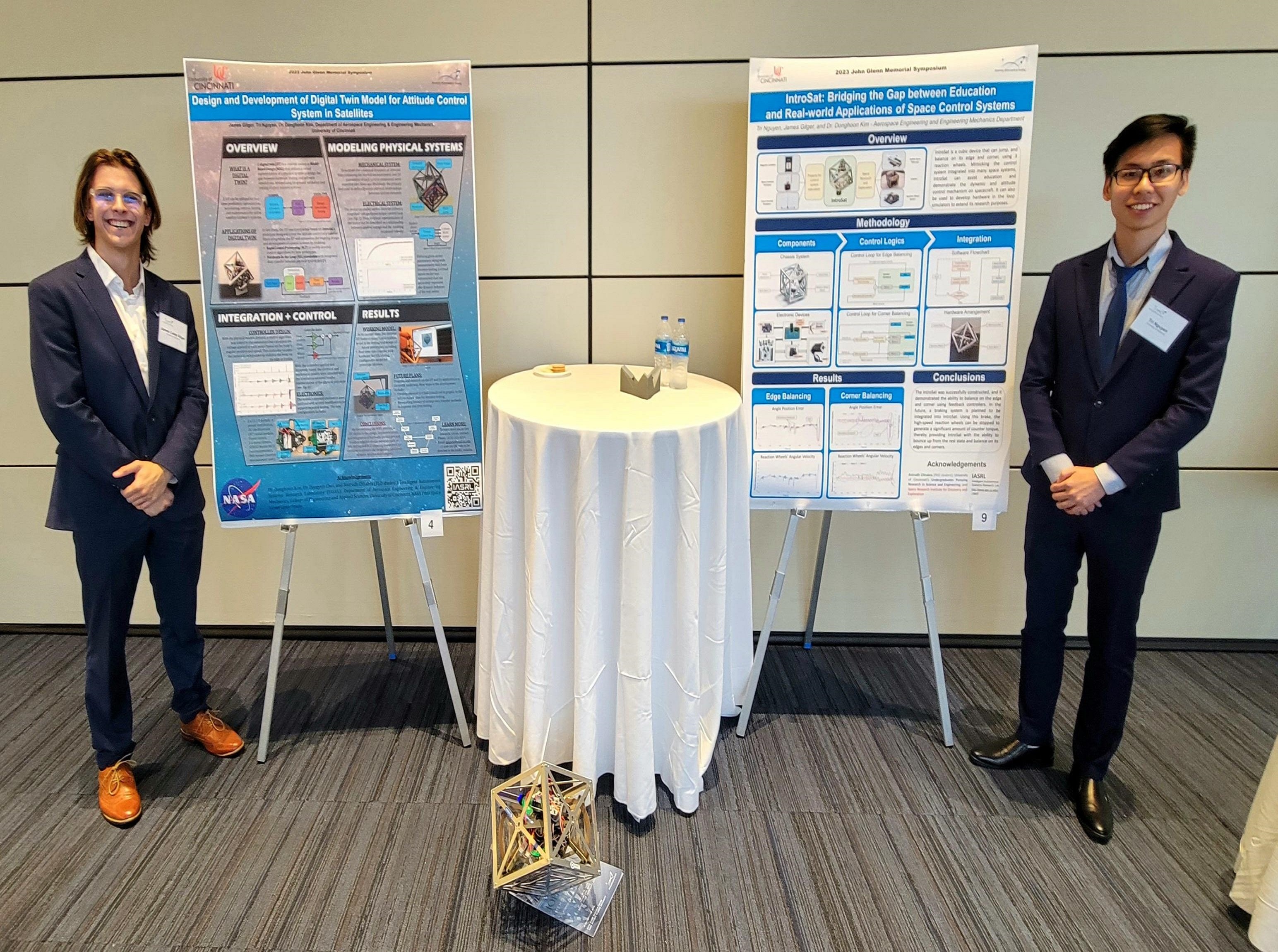
IASRL members at the 2023 John Glenn Memorial Symposium, Cleveland, Ohio.
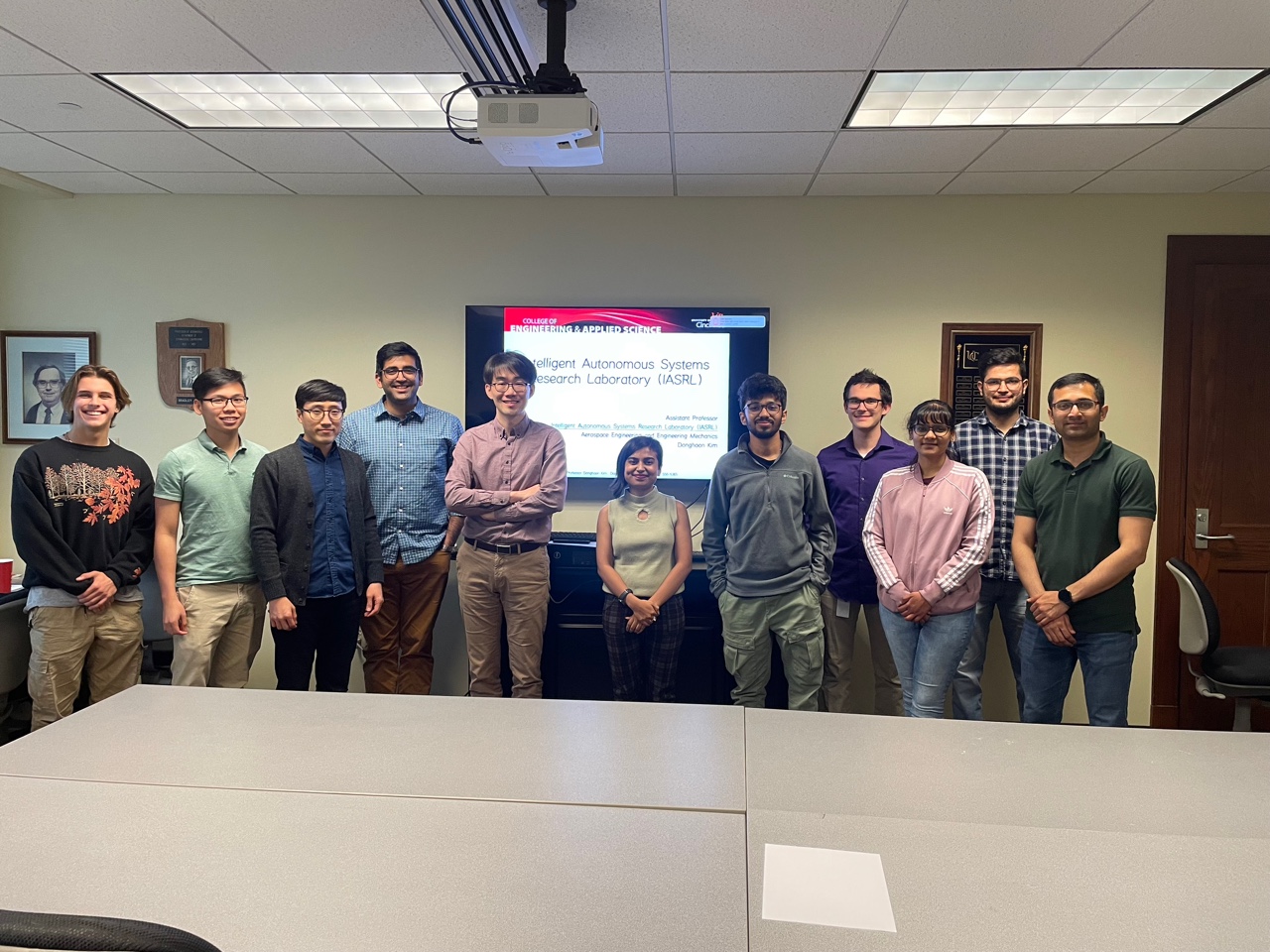
IASRL members attend the lab gathering during Summer 2023.
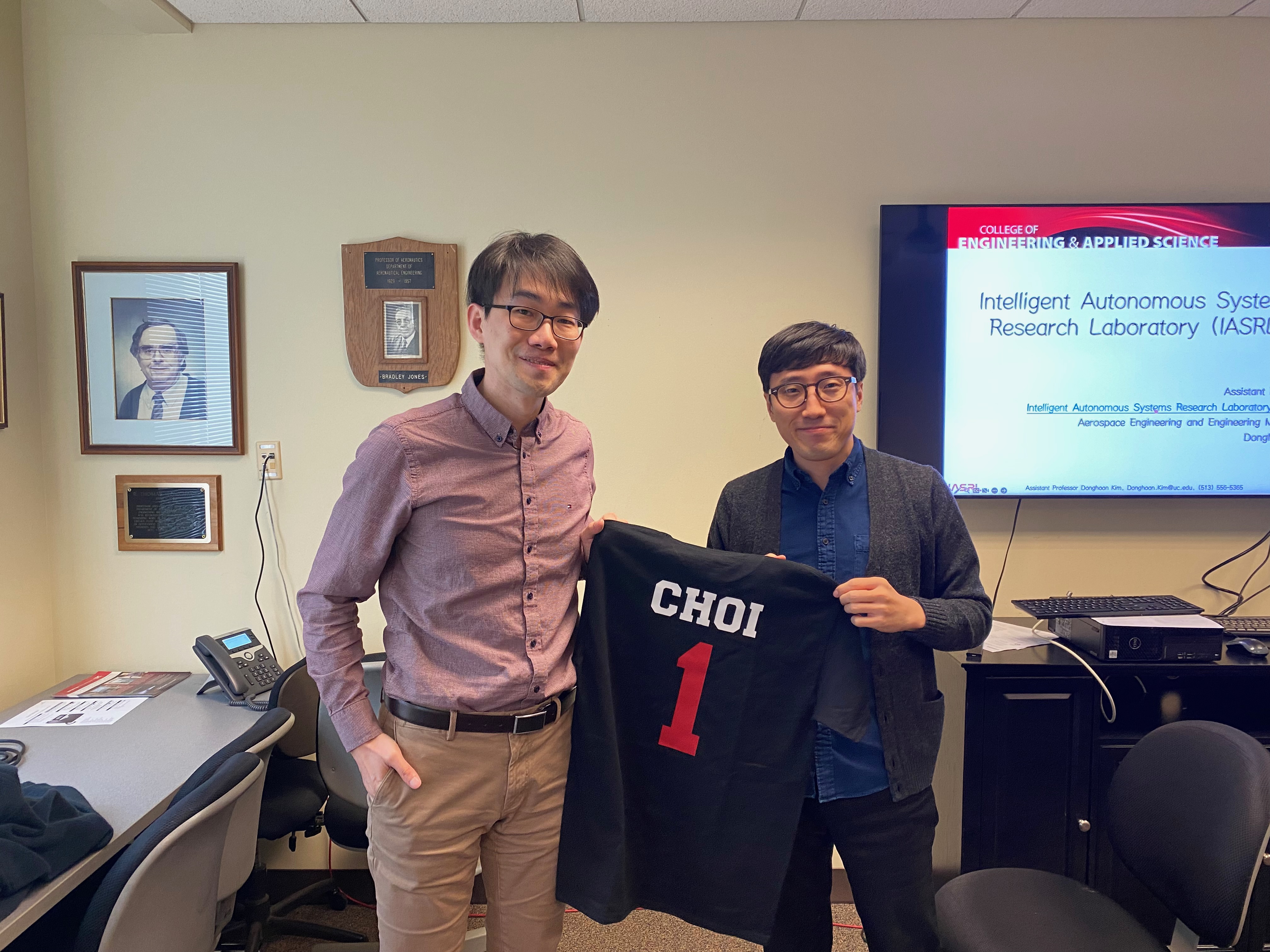
Daegyun Choi completes his Ph.D. Dissertation Defense. Congratulations Daegyun!
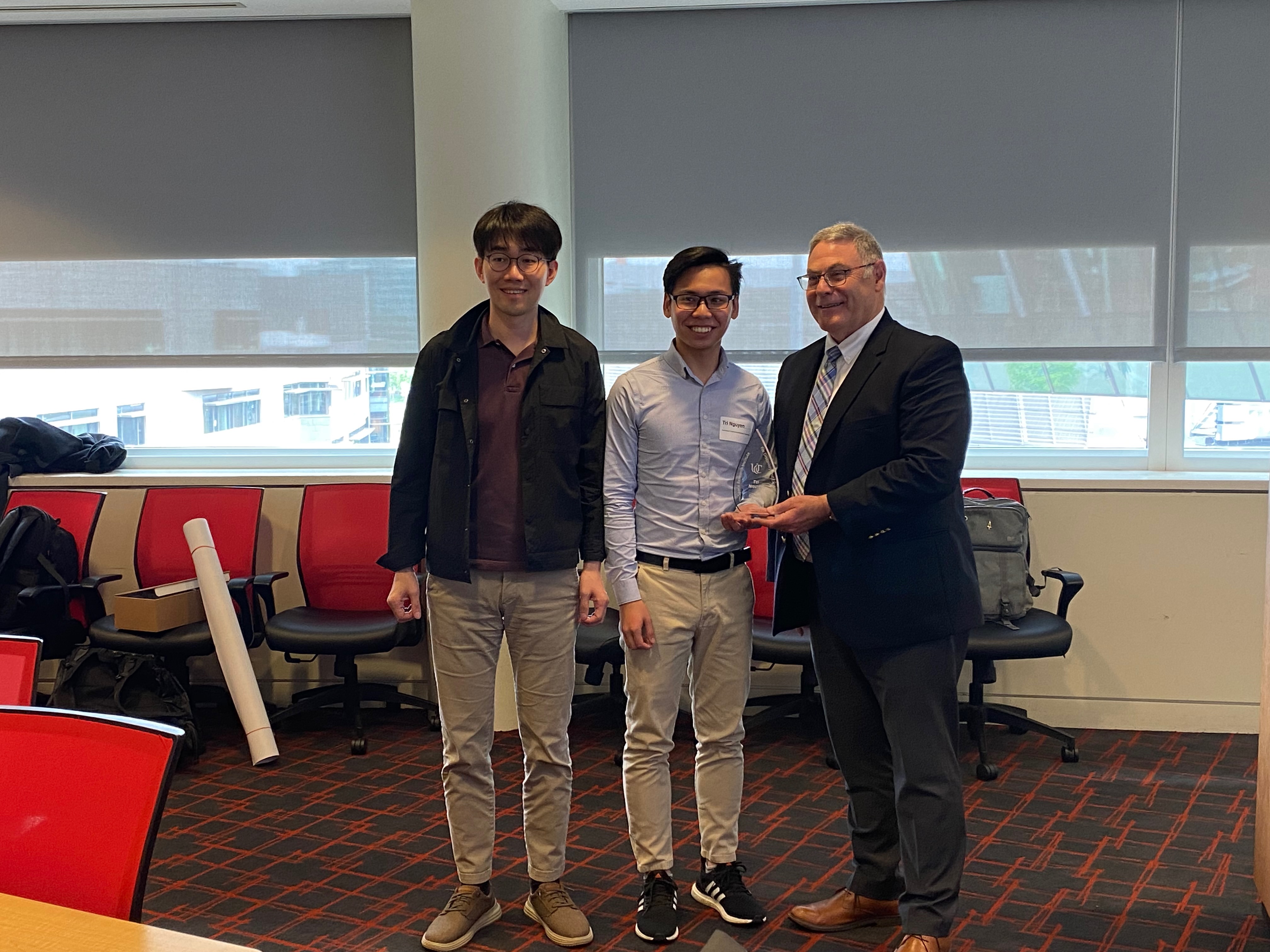
Huu Tri Nguyen receiving the SRIDE fellowship award at the UC’s 2022 Undergraduate Scholarly Showcase.
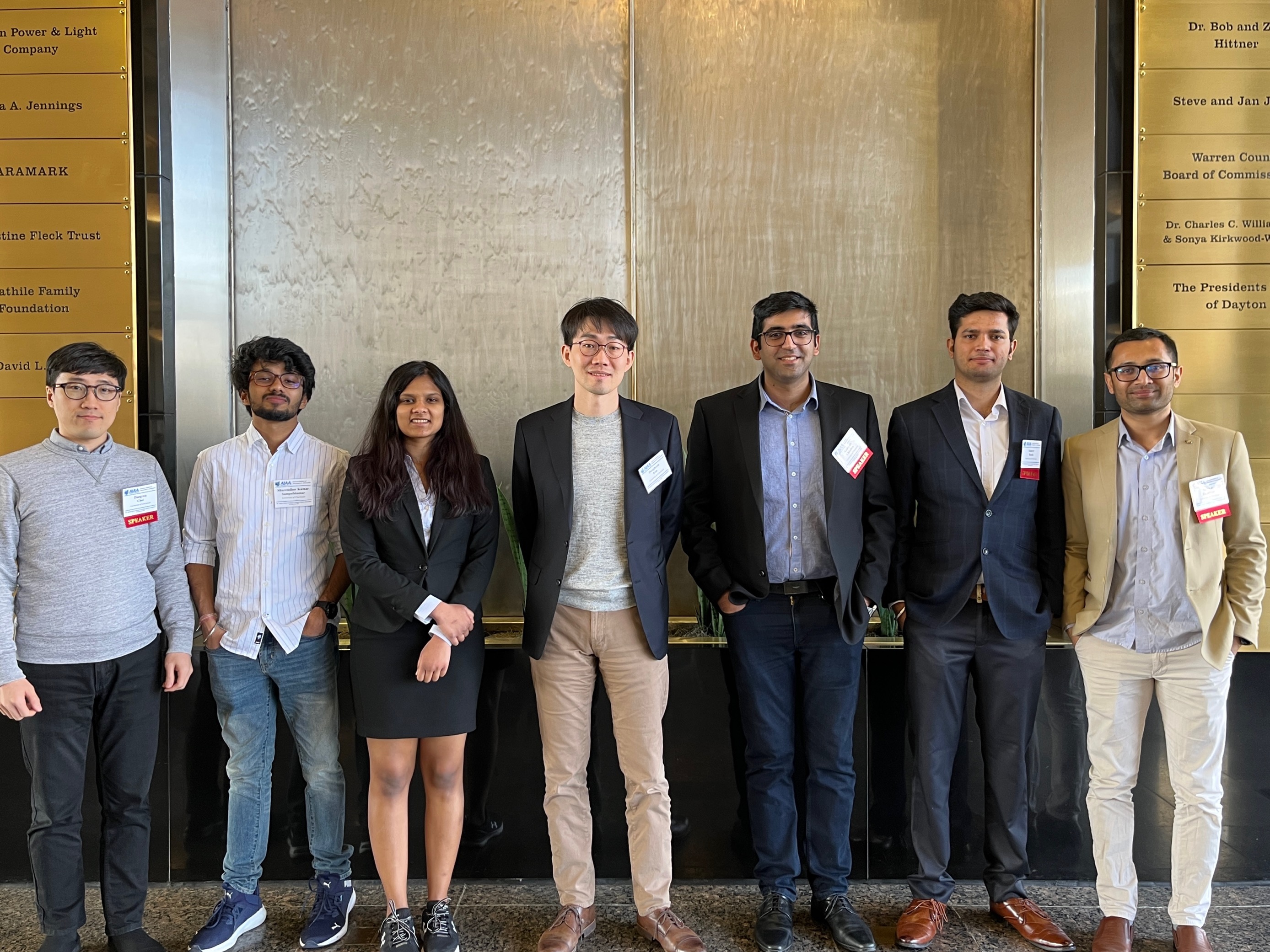
IASRL members at the 48th Dayton-Cincinnati Aerospace Sciences Symposium.
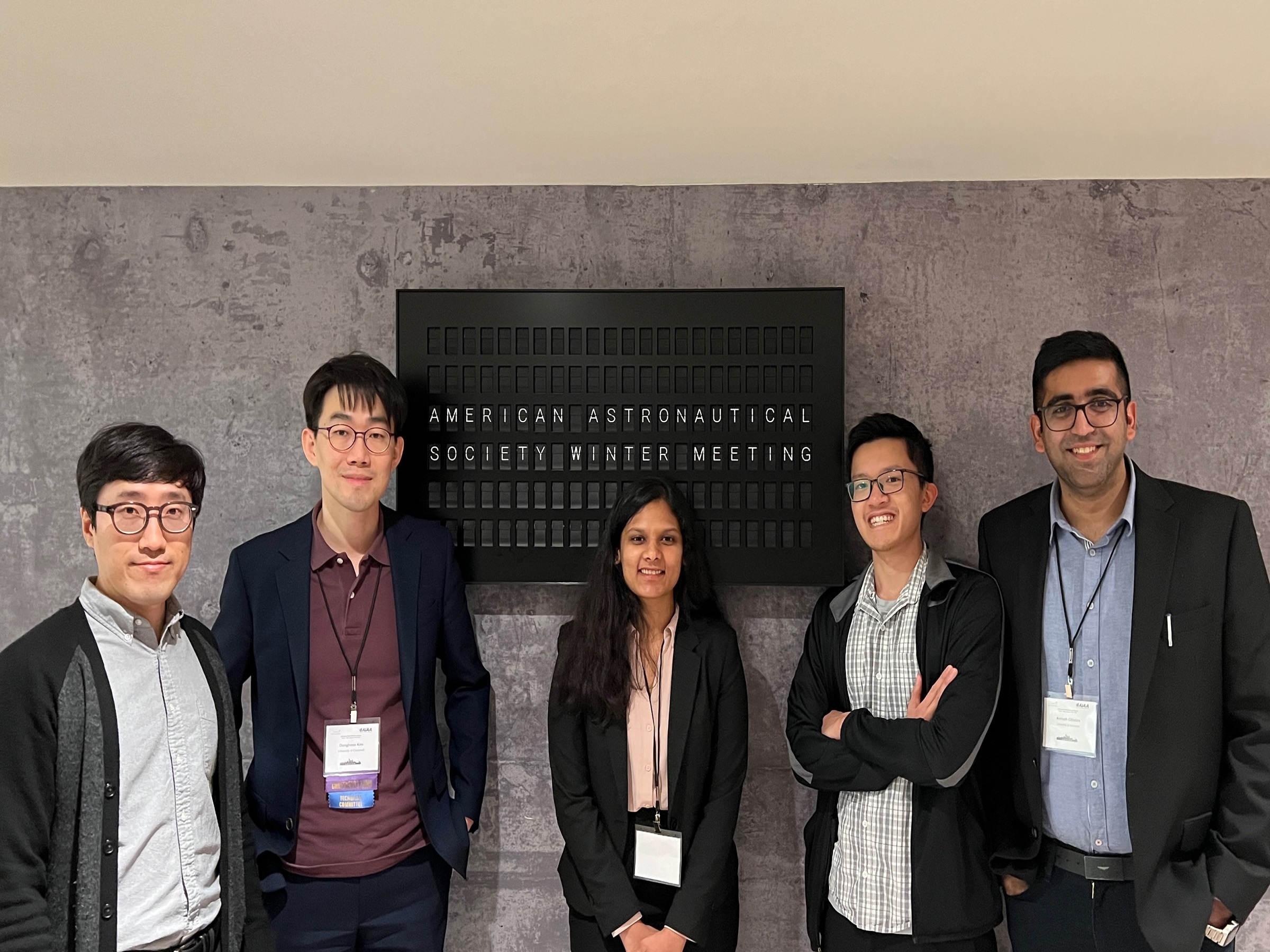
IASRL members attend the 2023 AAS/AIAA Space Flight Mechanics Meeting.
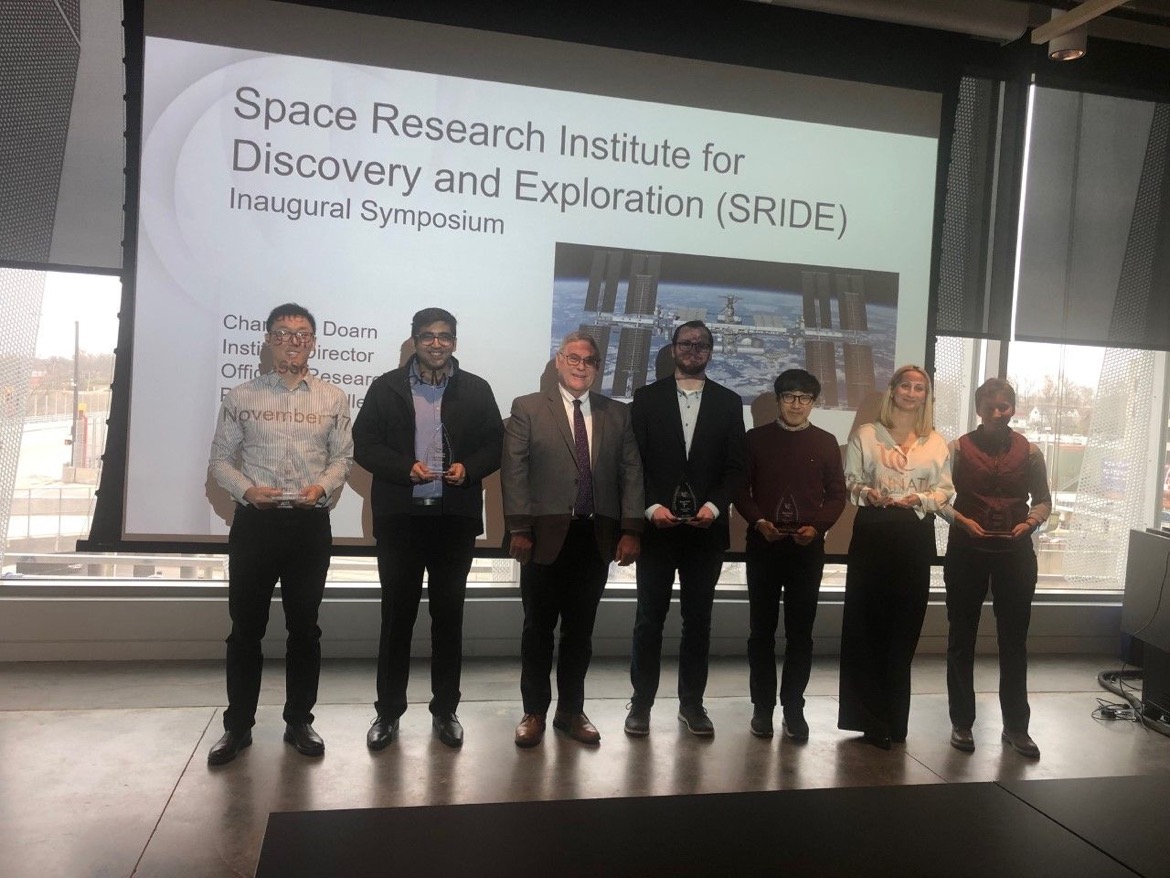
Anirudh and Daegyun (2nd and 5th from left) awarded at the SRIDE Annual Symposium 2022.
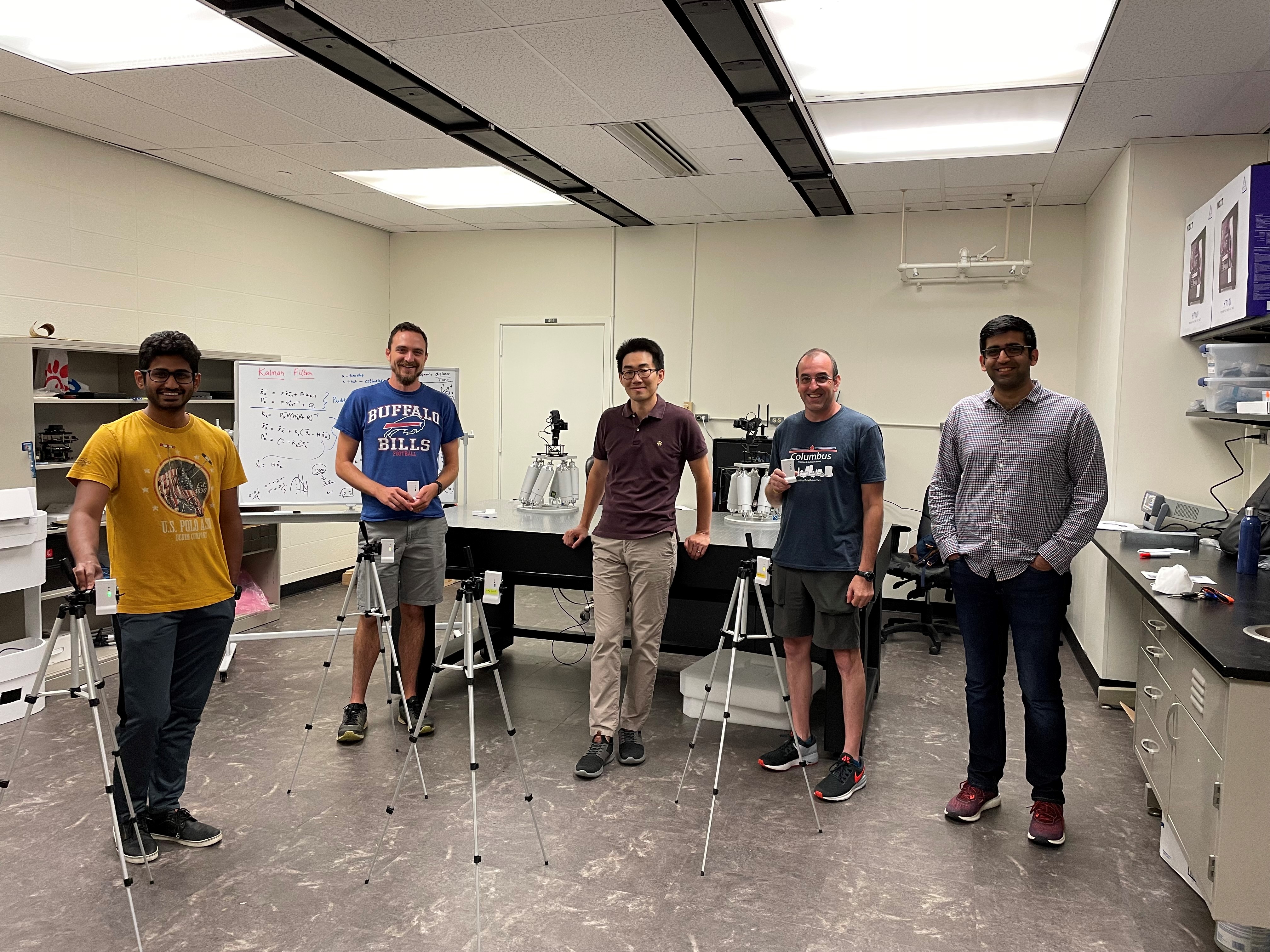
NSF Research Experience for Teachers 2021.
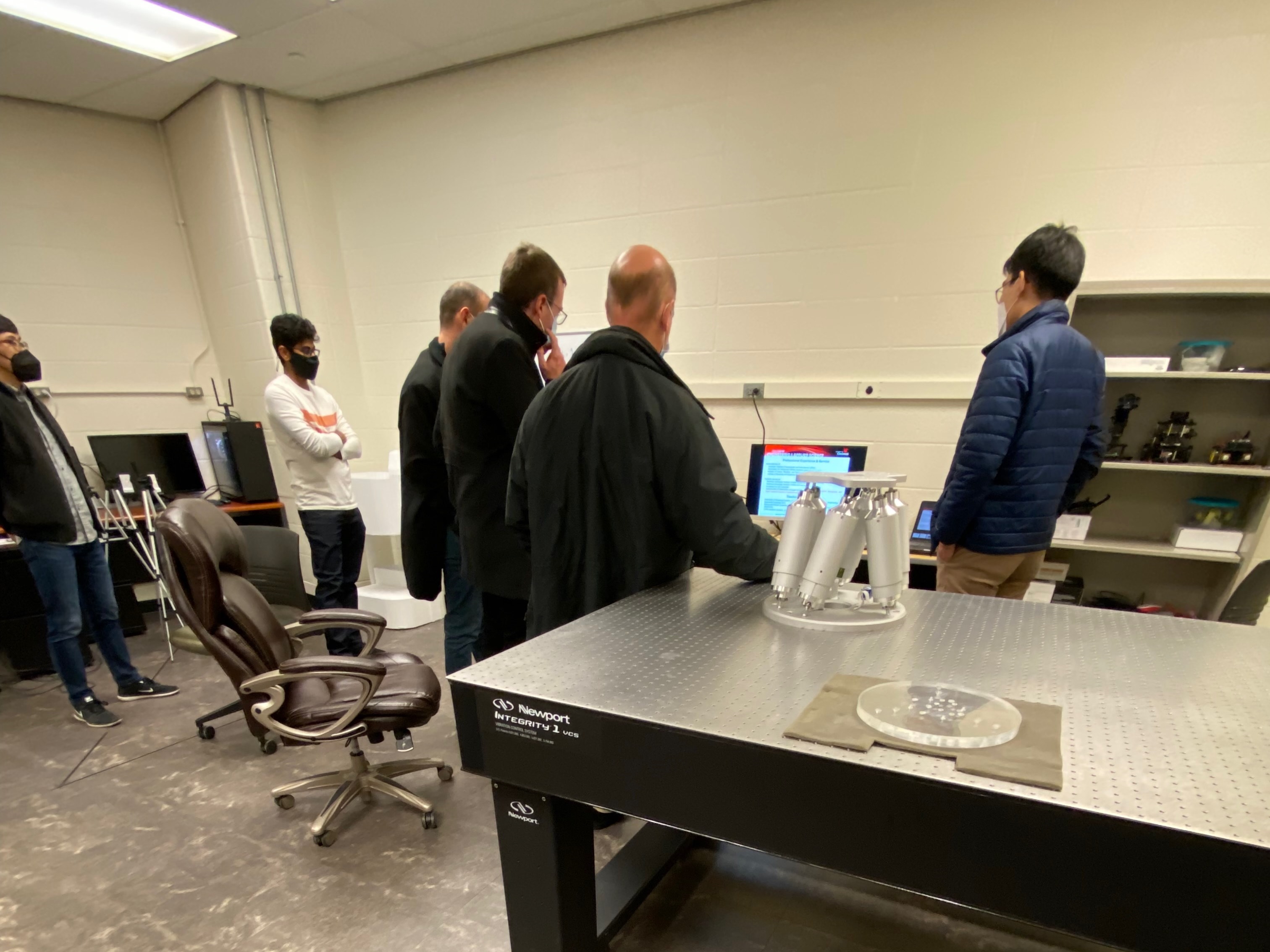
Visiting researchers from University of Bordeaux, France.
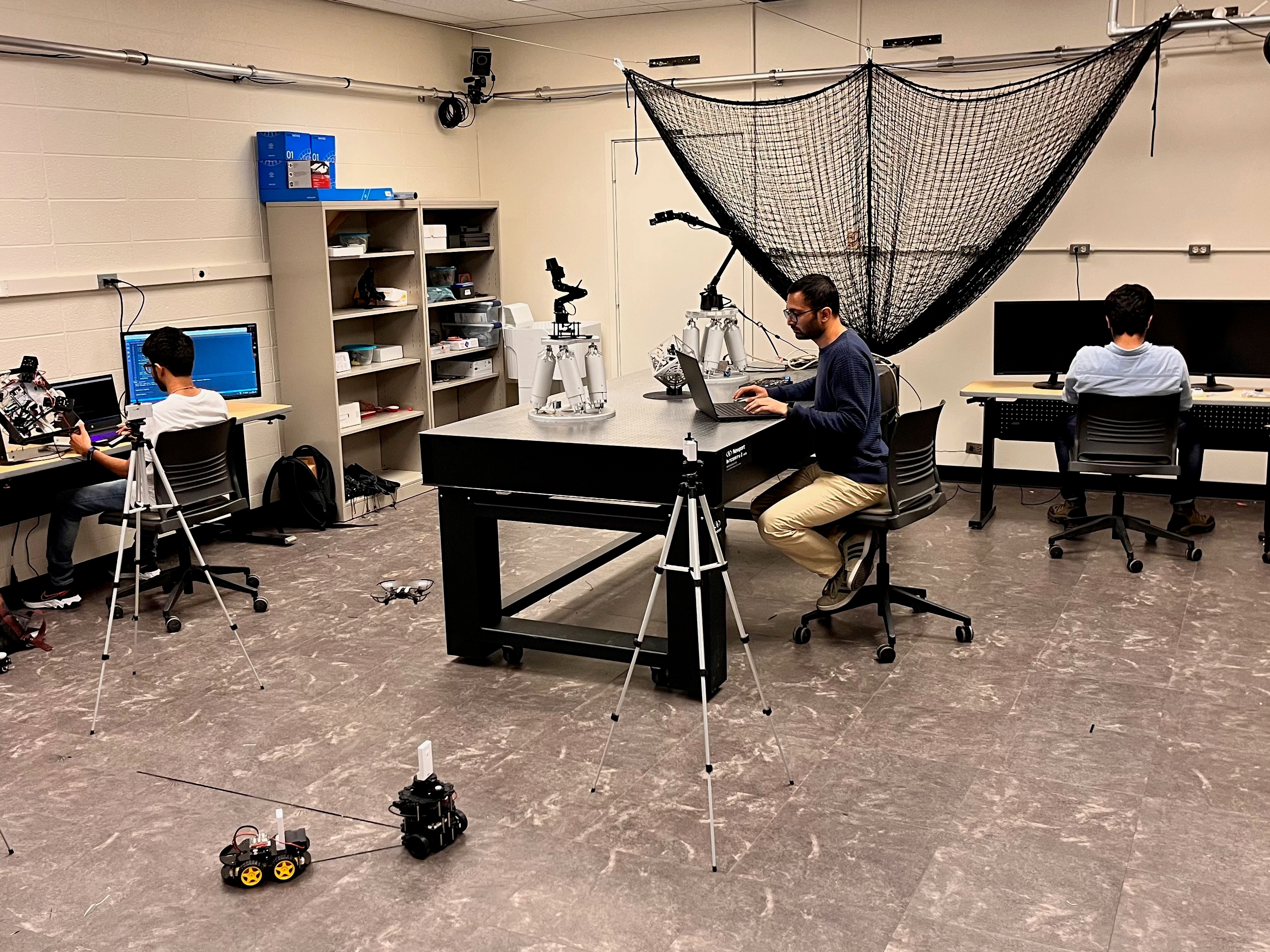
Lab members at work!
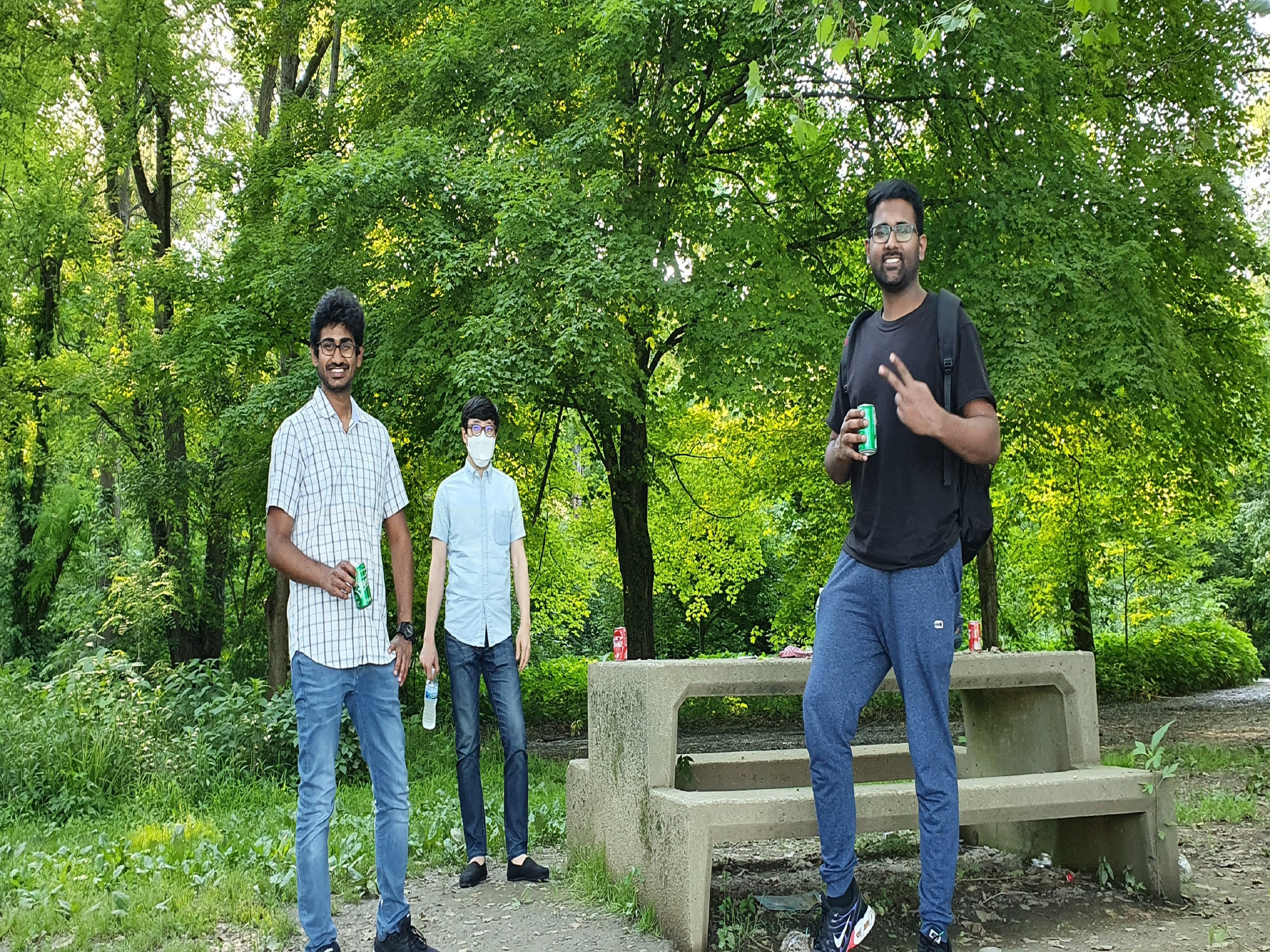
IASRL Members at the AIAA Awards Ceremony 2021.
Overview
The Intelligent Autonomous Systems and Robotics Laboratory (IASRL) in the Department of Aerospace Engineering and Engineering Mechanics (AEEM) at the University of Cincinnati (UC) advances space robotics, autonomous system design, control theory, and space vehicle development. The facility brings together faculty, post-doctoral scholars, and student researchers to address critical engineering challenges across space and terrestrial environments.Core Research Areas
- Space Robotics & In-Space Servicing: Space Manipulator Systems, dynamic coupling analysis, microgravity dynamic emulations, satellite servicing, autonomous inspection, and multi-body spacecraft maneuvering.
- Astrodynamics & Space Flight Dynamics: Celestial mechanics, attitude dynamics and control, Control Moment Gyroscope steering, trajectory optimization, and CubeSat mission development.
- Autonomous Navigation & Fault-Tolerant Control: Resilient control architectures, actuator failure reconfiguration, trajectory generation, and state estimation under space-environment uncertainties.
- Multi-Robot & Multi-Agent Systems: Distributed control frameworks, collision-free coordination, and autonomous swarm operations for space and ground applications.
- Resilient Perception & Artificial Intelligence Applications: Interference-robust localization systems, machine learning-enabled perception, and artificial intelligence integration with classical flight dynamics.
Experimental Facilities & Space Simulation Infrastructure
The laboratory features a specialized indoor robotics arena designed for testing, evaluating, and validating physical emulations of space vehicle platforms, ground mobility systems, and flight vehicles. Key equipment and hardware-in-the-loop space assets include:- Space Dynamics & Manipulation Testbed: Twin 6-degrees-of-freedom Stewart platforms paired with articulating robotic arms (two 4-degrees-of-freedom, one 6-degrees-of-freedom) for hardware-in-the-loop simulation of spacecraft proximity operations, contact dynamics, dynamic coupling, and on-orbit servicing.
- Optical Motion Tracking Network: High-precision multi-camera motion capture system providing sub-millimeter ground-truth positioning for indoor satellite mockups, free-floating emulators, and autonomous vehicles.
- Radio Frequency & GPS-Denied Localization Testbed: Portable 12-node Ultra-Wideband ranging sensor array for robust relative positioning and state estimation in Global Positioning System-denied scenarios.
- Ground & Aerial Mobile Fleets: Autonomous ground robots and aerial multi-rotors dedicated to multi-agent coordination, swarm intelligence, and autonomous inspection algorithms.
- High-Performance Computing Cluster: High-capacity Graphics Processing Unit workstations optimized for real-time optimal control solvers, space flight trajectory optimization, orbital mechanics numerical integration, and artificial intelligence model training.